
Sophia


Volumen 22 número 1 2026

Research article
Diego Fernando Ávila Clavijo1*  , Cristina Mercader Juan2
1Universitat de Barcelona, España.
2Universitat Autónoma de Barcelona, España.

Ávila Clavijo, D. F., Mercader Juan, C. (2026). Assessing Teachers’ Digital Competences in Early Childhood Education: A Systematic Review of Methodological Approaches. Sophia, 22(1). https://doi.org/10.18634/sophiaj.22v.1i.1586

This work is licensed under a Creative Commons Attribution 4.0 International License. Sophia. Copyright 2026. Universidad La Gran Colombia.
*Corresponding author: dr.avilaclavijo@gmail.com


the instruments used. This absence primarily reflects limitations in reporting transparency rather than intrinsic study quality. Operational competences and attitudes dominated the literature, whereas digital safety, collaboration, and assessment practices were underrepresented. The field would benefit from clearer methodological standards and more consistent reporting of measurement properties to enhance comparability and evidence-based decision-making. Conclusions: Strengthening psychometric transparency and diversifying evaluation profiles may support more robust TDC assessment and more equitable digital integration in ECE.



In today’s digital landscape, Information and Communication Technologies (ICT) are transforming teaching and learning processes. Early Childhood Education (ECE), as a critical stage in the development of cognitive, communicative, and socioemotional skills, has not been exempt from this transformation (Díaz et al., 2021). Recent studies indicate that the integration of digital technologies in ECE can open opportunities to enhance educational quality by fostering inclusion (Vega et al., 2021) and strengthening children’s problem-solving skills through the pedagogical use of digital tools (Pöntinen & Räty-Záborszky, 2020).
This phenomenon has generated growing interest in educational and research communities regarding the development of teachers ’digital competence (TDC), understood as a construct that guides educators in the relevant, appropriate, and equitable integration of ICT into professional practice. To ensure conceptual clarity, it is important to distinguish TDC from related constructs. Digital literacy generally refers to the foundational skills required to access, understand, and use digital tools, whereas digital competence encompasses a broader ability to apply digital technologies effectively across different life, learning, and work domains. Teacher Digital Competence (TDC), by contrast, refers specifically to the pedagogical, ethical, and professional use of digital technologies in educational settings (Cervera et al., 2016). In this sense, TDC is increasingly framed within broader agendas of educational quality, equity, and inclusion (UNESCO, 2016).
However, as research on TDC in ECE expands, the field faces significant challenges regarding how this competence is assessed. The current landscape is characterized by marked heterogeneity, which can be understood across three main dimensions: (1) diversity in the theoretical frameworks used to define TDC, (2) differences in how the construct is operationalized across instruments and studies, and (3) the absence of common criteria for reporting validation evidence. To address this issue systematically, this review relies on two core concepts: methodological quality, defined here as the degree of rigor, transparency, and coherence in the design and reporting of primary studies; and psychometric transparency, understood as the level of explicit reporting of validity and reliability evidence for the assessment instruments used.
TDC is defined as the set of knowledge, skills, and attitudes required for the effective use of ICT in teaching (Cervera et al., 2016). It has become a key indicator of teacher preparedness in an increasingly digitized educational context. In ECE, this challenge has specific characteristics that distinguish it from other educational levels. While in higher grades digital technologies may be used more frequently for content delivery, information processing, or independent learning tasks, in ECE their integration must be sensitive to young children’s cognitive, communicative, and socioemotional development. This requires pedagogical practices that consider play-based learning, adult mediation, age-appropriate interaction, and the need to preserve concrete, social, and embodied learning experiences (Kayode & Olaronke, 2014). In this context, TDC assessment plays a relevant role in identifying educators ’strengths and areas for improvement in the pedagogical use of digital technologies.

Standards or reference frameworks provide a shared basis for evaluating TDC. Widely recognized models include DigCompEdu (Redecker, 2017), TPACK (Mishra & Koehler, 2006), and UNESCO’s ICT- CFT (UNESCO, 2018). These frameworks serve different analytical purposes. DigCompEdu provides a teacher-specific framework for understanding digital competence in professional, pedagogical, and learner-oriented practices. TPACK focuses on the interaction between technological, pedagogical, and content knowledge, offering a lens for examining how teachers integrate technology into instructional decision-making. ICT-CFT, in turn, provides a broader policy and professional development framework for ICT integration in education. In this systematic review, these frameworks are not treated only as theoretical background; they are used as analytical references to classify the dimensions of TDC that primary studies seek to measure and to identify which pedagogical and technological aspects are most frequently assessed in ECE settings.
The use of assessment instruments enables the measurement of TDC development. Here, reliability and validity are essential to evaluate the accuracy, consistency, and interpretive usefulness of such instruments. According to Cohen et al. (2021), reliability refers to consistency across time and contexts, whereas validity concerns the extent to which an instrument measures what it intends to measure—in this case, TDC as applied to early childhood settings. Depending on the methodological approach, TDC can be assessed through self-evaluations by teachers, peer evaluations by colleagues or school leaders, or external assessments conducted by experts (García & García, 2022). Self- evaluations are frequently used because they are scalable and relatively easy to administer; however, they should be interpreted with caution. As self-report instruments capture perceived competence, they may be affected by social desirability and by the gap between perceived and enacted pedagogical practice. This limitation is especially relevant when interpreting findings from primary studies that rely mainly on teachers ’self-assessments.
A recent systematic review by Su and Yang (2023) examined multiple aspects of TDC in ECE, including conceptual definitions, competence dimensions, influencing factors, and methodological limitations. Their synthesis highlights the growing importance of TDC in preschool contexts and calls for future research to better address sociocultural diversity, equity of access, and digital inclusion. However, while the review summarizes instruments used across studies, it does not provide a systematic analysis of how TDC is assessed in empirical research, particularly in terms of methodological quality understood as rigor and transparency in reporting, psychometric transparency regarding reliability and validity evidence, evaluator profiles, and the specific operationalization of conceptual frameworks.
These limitations restrict the field’s ability to draw robust methodological conclusions and to inform evidence-based decisions in teacher education. In contrast, the present review focuses explicitly on the methodological features of TDC assessment studies. Specifically, it expands upon previous analyses by systematically extracting and examining dimensions that have received limited attention, such as the psychometric evidence reported, the profiles of the evaluators involved, the type of assessment instruments used, and the criteria related to methodological reporting and transparency.

By emphasizing empirical assessment practices and their reporting limitations, this review addresses a critical gap in the literature and aims to strengthen the foundation for future research, policy design, and targeted professional development in digital competence for early childhood educators.
To explore these issues in depth, the review is guided by the following research questions (see Table 1):

Research Areas | Research Questions (RQ) |
Area 1 General | RQ1. When and where have studies on TDC assessment in ECE been conducted? RQ2. What research approaches are most commonly employed in these studies? |
Characteristics RQ3. What sample sizes and participant characteristics are reported across studies? | |
Area 2 Methodological | RQ4. Which conceptual frameworks underpin the analysis of TDC in these studies? RQ5. Which specific digital competences are assessed in the reviewed studies? |
Aspects RQ6. What instruments are used, and what reliability and validity evidence is reported? | |
RQ7. Who is responsible for evaluating teachers’ digital competence in these studies? | |

Through this analysis, the aim is to provide a detailed overview of the advancements and challenges in research on the assessment of TDC in preschool education, as well as to offer recommendations for optimizing the professional development of early childhood educators in the current digital context.
This systematic review followed the Preferred Reporting Items for Systematic Reviews and Meta- Analyses guidelines (PRISMA 2020; Page et al., 2021). The review protocol was not externally registered. However, an internal protocol was developed before the screening and extraction stages, following PRISMA 2020 recommendations. The protocol is available from the corresponding author upon reasonable request.
To ensure methodological transparency and replicability, explicit inclusion and exclusion criteria were established prior to the screening process (see Table 2). Studies were included if they directly addressed the research questions of this review, specifically by focusing on the assessment of TDC in ECE. Eligible samples comprised both in-service and pre-service early childhood teachers, provided that the study clearly identified the educational context and reported the instrument(s) used for evaluation. Only empirical studies were considered, regardless of language of publication, provided that they offered sufficient methodological detail to assess their relevance to the review and the transparency of their reporting.
Several types of studies were excluded. First, publications prior to 2006 were omitted. This temporal threshold was selected because 2006 coincides with the publication of influential frameworks for technology integration in teaching, particularly the TPACK framework (Mishra & Koehler, 2006), which contributed to the conceptual foundations on which later approaches to teacher digital competence

assessment have been developed. Second, studies that lacked critical information about the sample, the evaluation instrument, or the educational context were excluded, as they did not allow for adequate appraisal or comparison. Third, research focusing primarily on educational levels other than early childhood education, such as primary, secondary, or higher education, was excluded. However, studies involving mixed samples from early childhood and other educational levels were retained when early childhood education teachers were explicitly represented in the sample and sufficient contextual or methodological information allowed their relevance to TDC assessment in ECE to be established. When findings were not fully disaggregated by educational level, this condition was considered during interpretation and is acknowledged as a limitation of the review. This criterion was applied to preserve the focus on ECE while avoiding the exclusion of studies in which early childhood teachers formed part of broader samples relevant to the review objective. Fourth, studies that examined general teaching competencies without an explicit link to digital competence were excluded, as were theoretical or reflective articles that did not present empirical evidence. Finally, studies investigating the impact of technology use in classrooms without explicitly evaluating TDC were also excluded, since the focus of this review was on competence assessment rather than technology adoption per se.
Inclusion Criteria | Exclusion Criteria |
Relevance to the research questions of this review | Studies published before 2006 |
Specificity of the sample, including in-service or pre- service teachers | Studies lacking information on the sample, evaluation instrument, and/or educational context |
Focus on early childhood education or explicit inclusion of ECE teachers in mixed educational-level samples | Studies focused exclusively on educational levels other than early childhood education |
Clear identification of the assessed digital competence | Studies analyzing teaching competencies unrelated to the digital domain |
Empirical studies published in any language | Non-empirical studies (e.g., conceptual or reflective articles on TDC) |
— | Studies analyzing the impact of technology use without evaluating TDC |
For screening and coding purposes, studies published in languages other than Spanish were translated using DeepL Translator. To minimize translation bias and support conceptual accuracy, translated instruments and key methodological descriptions were reviewed by a bilingual researcher fluent in both the source language and Spanish. Discrepancies in translation were resolved through discussion, and, when necessary, the original context was checked against the source document. This procedure was intended to preserve the meaning of operational definitions and psychometric terminology across languages. No restrictions were applied in terms of country, language, or research method.
An advanced search was conducted in four academic databases widely recognized in the field of education: Scopus, Web of Science (WoS), ERIC (EBSCOhost), and Education Database (ProQuest). The search strategy was informed by previous reviews on TDC assessment and constructed using

commonly cited descriptors. Boolean operators “AND” and “OR” were applied to structure the queries, as shown in Table 3.
Database | Boolean Search String | Search Field |
Scopus | (digital competence OR digital literacy OR ICT use OR use of technology) AND (preschool teacher OR preschool education OR early childhood education) | Title, abstract, keywords |
WoS | (digital competence OR digital literacy OR ICT use OR use of technology) AND (preschool teacher OR preschool education OR early childhood education) | Title, abstract |
ERIC | (digital competence OR digital literacy OR ICT use OR use of technology) AND (preschool teacher OR preschool education OR early childhood education) | Title, peer- reviewed |
Education Database | (digital competence OR digital literacy OR ICT use OR use of technology) AND (preschool teacher OR preschool education OR early childhood education) | Title, peer- reviewed |
authors.
Study selection was conducted independently by two reviewers. First, titles and abstracts of all retrieved references were screened according to the inclusion and exclusion criteria. Full-text screening was then conducted to confirm eligibility. Discrepancies between reviewers were resolved through discussion and consensus. Percentage agreement was calculated to estimate consistency between reviewers, showing 86% agreement at the title and abstract screening stage and 91% agreement at the full-text screening stage. All retrieved records were imported into Mendeley Desktop 1.19.4 (Elsevier) for manual deduplication.
A standardized data extraction spreadsheet was created using Google Sheets and accompanied by a detailed coding manual. The extraction process addressed two main areas:
General characteristics of the studies: publication year, country, research design, sample size, educational context, type of participants (pre-service or in-service teachers), and language of the original study.
Methodological aspects of TDC assessment: conceptual framework used, such as DigCompEdu, TPACK, ICT-CFT, or other frameworks; specific TDC dimensions assessed; type of assessment instrument, such as self-report, peer evaluation, or external assessment; psychometric evidence reported, including reliability coefficients, validity evidence, and factor structure when available; evaluator profiles; and methodological transparency indicators, which were classified according to a typology developed for this review (see the Quality Assessment section below for detailed criteria).

Prior to the screening process, a structured review protocol was developed to guide the identification, selection, and extraction of studies. The protocol specified the research questions, inclusion and exclusion criteria, database selection, search strategy, and data extraction categories. A standardized extraction sheet was created to ensure consistency in coding methodological features, conceptual frameworks, instruments used, psychometric reporting, and evaluator profiles. The protocol was internally reviewed by the research team before implementation to enhance transparency and replicability. It was not registered in an external database such as PROSPERO. The full protocol is available from the corresponding author upon reasonable request.
Because the primary objective of this review was to analyse how TDC is assessed, rather than to estimate intervention effects, we applied a quality appraisal approach centred on measurement and reporting transparency. Risk-of-bias tools designed for intervention-effect studies were not considered suitable, as the included articles primarily examined assessment instruments and methodological reporting practices rather than causal outcomes.
The appraisal considered four dimensions relevant to methodological and psychometric reporting transparency: (1) alignment between the study objectives and methodological design; (2) clarity and completeness in the description of the assessment instrument, including dimensions and operational definitions; (3) reporting of psychometric evidence, such as reliability, validity evidence, and factor structure when available; and (4) clarity of the publication and review status of the study.
For the comparative synthesis presented in Table 4, these dimensions were operationalized through two core reporting criteria that could be consistently identified across all included studies: the presence of an explicit conceptual framework or standard, and the reporting of psychometric evidence for the assessment instrument. Based on these two criteria, each study was classified into a four-category typology (A–D) reflecting levels of methodological and psychometric reporting transparency:
Category A (higher reporting transparency): Studies that reported both an explicit conceptual framework or standard and psychometric evidence for the assessment instrument.
Category B (conceptual framework reported only): Studies that reported an explicit conceptual framework or standard but did not report psychometric evidence for the assessment instrument.
Category C (psychometric evidence reported only): Studies that reported psychometric evidence for the assessment instrument but did not report an explicit conceptual framework or standard.
Category D (lower reporting transparency): Studies that reported neither an explicit conceptual framework or standard nor psychometric evidence for the assessment instrument.
This typology was developed for the purposes of this review to support a structured comparison of reporting transparency across studies assessing TDC in ECE. No numerical weighting was assigned to the criteria. Rather, the classification was based on the presence or absence of two consistently observable reporting elements. Therefore, the typology should not be interpreted as a direct measure of the intrinsic methodological quality of the primary studies, but as an indicator of how transparently they reported their conceptual and psychometric basis.

Results

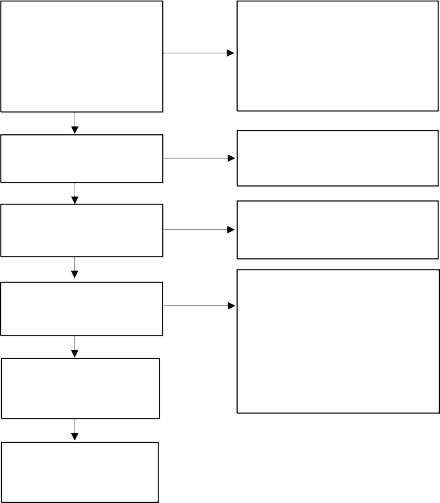
The study selection process is illustrated in Figure 1, following the PRISMA 2020 flow diagram.

Identification
Records identified from: 2006
Databases (n=4)
Scopus (n= 35)
Web of science (n=24)
Education database (n=24)
Records removed before screening:
Duplicate records removed (n=26) Records marked as ineligible by automation tools (n=0)
Records removed for other

Records screened (n=93) Records excluded (n=0)
Screening
Reports sought for retrieval (n=93)
Reports assessed for eligibility (n=93)

New studies included in review (n=0)
Included
Reports of new included
Total studies included in review (n=18)
Reports not retrieved (n=0)
Reports excluded: 75
Non-empirical study (n=16), Technology use impact study (n=49)
Study of non-digital competencies
(n=5)
Instrument development study (n=5),
involving pre-service teachers were included when they addressed the digital competence of future early childhood
educators. Data compiled by the authors.
The search and screening procedures yielded a total of 119 records: 35 from Scopus, 24 from Web of Science, 24 from Education Database, and 36 from ERIC. After the manual removal of 26 duplicate entries using the reference management software, 93 unique records were retained. These records were screened and sought for retrieval, with no records excluded at these stages. The 93 reports were then assessed for eligibility, and 75 were excluded because they did not meet the inclusion criteria. The main reasons for exclusion were technology use impact studies (n = 49), non-empirical studies (n
= 16), studies of non-digital competences (n = 5), and instrument development studies not directly

aligned with the review focus (n = 5). The remaining 18 studies met the eligibility criteria and were included in the final analysis.
This section presents the findings related to Research Area 1, which includes RQ1, RQ2, and RQ3 and addresses the temporal, geographical, and methodological characteristics of the studies included in the review.
The temporal distribution of publications on the assessment of TDC in ECE is depicted in Figure 2.
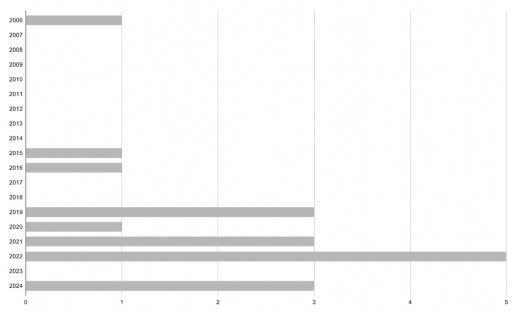
The review covers studies published between 2006 and 2024. Publications were limited before 2019, followed by a higher concentration of studies from 2019 onward. The largest number of publications was observed in 2022 (n = 5). Across the full period, the average annual output remained low, indicating that the assessment of TDC in ECE is still a relatively small research area. The mode corresponds to 2022, and the median publication year is 2021. These data show a recent concentration of empirical work without implying a causal explanation for the increase.
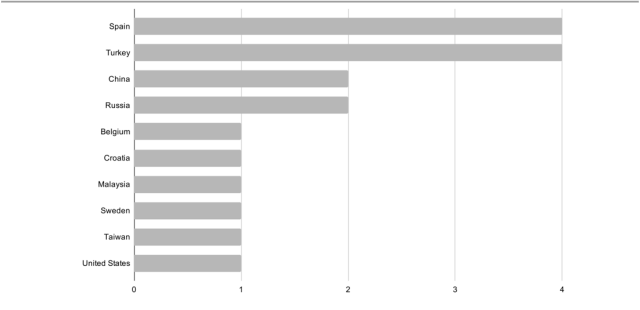
The geographical distribution of the reviewed studies is shown in Figure 3.
authors.
A notable concentration of studies was found in Spain (22.2%, n = 4) and Turkey (22.2%, n = 4), followed by China and Russia (11.1%, n = 2 each). Belgium, Malaysia, Croatia, Sweden, Taiwan, and the United States each accounted for 5.6% of the reviewed studies (n = 1 per country). This distribution indicates an uneven geographical representation of research on TDC assessment in ECE. No studies from Africa, Latin America, or Oceania were identified in the final sample, which points to a geographical gap in the reviewed literature rather than to a direct explanation of its causes.
In terms of methodological approach, most studies employed quantitative methods (77.8%, n = 14), while qualitative (16.7%, n = 3) and mixed-methods approaches (5.6%, n = 1) were less frequent. This distribution shows a predominance of quantitative designs in the reviewed literature, particularly in studies using standardized instruments to assess dimensions of TDC.
The distribution of participants in the reviewed studies is illustrated in Figure 4.
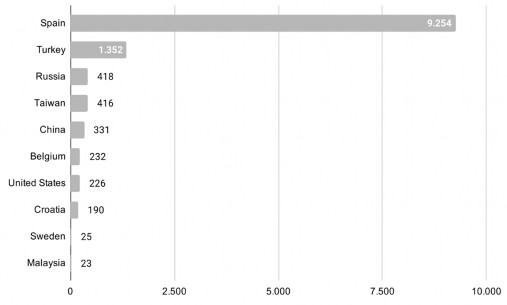
The total number of participants across all reviewed studies was 12,467. Spain accounted for the largest number of participants (n = 9,254), followed by Turkey (n = 1,352), Russia (n = 418), Taiwan (n
= 416), China (n = 331), Belgium (n = 232), the United States (n = 226), Croatia (n = 190), Sweden (n = 25), and Malaysia (n = 23). This distribution shows a strong concentration of participants in a small number of countries, particularly Spain and Turkey.
Most samples were composed of preschool teachers or pre-service early childhood teachers. However, several studies included mixed or insufficiently disaggregated samples. For example, the study from the United States included preschool and primary teachers without separate reporting by educational level. Some pre-service teacher samples also included participants linked to primary education or did not report the exact number corresponding exclusively to ECE. These cases were retained because they included early childhood teachers or early childhood teacher education within their samples; however, this limitation was considered when interpreting findings specific to ECE.
This section presents the findings related to Research Area 2, which includes RQ4, RQ5, RQ6, and RQ7 and focuses on the conceptual frameworks, assessment instruments, psychometric reporting, and evaluator profiles used in TDC assessment studies.
The methodological features of the reviewed studies, including the conceptual frameworks employed, the digital competences assessed, the instruments used, and the evaluator profiles, are summarized in Table 4.

Type | Standard or framework | Psychometric evidence | Study |
Type A: Higher reporting transparency | TPACK TPACK-Deep Digital Literacy Skills Scale Online Reading Comprehension Strategies Attitudes Toward Techno lo gy Scale | Cronbach's Alpha Pilot test | Altun (2019) |
Krumsvik (2014) UTAUT
| Cronbach's Alpha Expert judgment P ilot test | Casillas et al. (2019) | |
Attitude scale (Gömleksiz, 2 00 4 ) | Cronbach's Alpha | Kabadayi (2006) | |
García and De Roock (2021)
| Reflective indicators Partial Least Squares Internal consistency Resampling Cronbach's Alpha Composite reliability Average Variance Ext racted | Lo et al. (2024) | |
Cabero et al. (2016)
| Second-order confirmatory model Bo otstrapping | Medina et al. (2021) | |
Digital Literacy Scale Teaching Readiness Scale
| Cronbach's Alpha Kaiser-Meyer-Olkin Bartlett's test of sphericity | Öngören (2021) | |
ICT Use in ECE Scale
| Cronbach's Alpha Kaiser-Meyer-Olkin Measure Bartlett's Test Expert judgment | Öngören (2022) | |
TPACK Computer Technology Sur vey | Factor analysis Expert judgment P ilot test | Prishker et al. (2024) | |
DigCompEdu
| Cronbach's Alpha M cDo nald's Omega | Romero et al. (2 02 4) | |
| TPACK | Cronbach's Alpha Exploratory factor analysis Kaiser-Meyer-Olkin Measure Bartlett's Test of Sphericity | Sušić and Palić (2022) |
| Ay maletdinov et al. (20 19 ) | Undecl ared | Anisimova (2 02 0) |

Type B: Conceptual framework reported only | MCECD
| Undeclared | Galindo and Bezanilla (2 02 1 ) |
TPACK | Undecl ared | M aso umi (20 20 ) | |
| TPACK | Undecl ared | Yang et al. (2 02 2) |
Type C: Psychometric evidence reported only | Undeclared
| Decision recording Well-trained mo derato r | Ali et al. (2022) |
Undecl ared | P ilot test | D o ng (2 016 ) | |
| Undeclared | Cronbach's Alpha | Kerckaert et al. (2 01 5) |
Type D: Lower reporting transparency | Undeclared | Undeclared | Batenova et al. (2019) |
Note: The A–D typology summarizes methodological and psychometric reporting transparency based on two consistently observable criteria: the presence of an explicit conceptual framework or standard and the reporting of
psychometric evidence for the assessment instrument. Type A = both criteria reported; Type B = conceptual framework or standard reported only; Type C = psychometric evidence reported only; Type D = neither criterion reported. The typology does not assess the intrinsic quality of the studies or instruments, but the transparency with which their conceptual and psychometric basis was reported. Data compiled by the authors.
Using this typology, most reviewed studies (77.8%, n = 14) reported a standard or conceptual framework for analysing TDC in ECE. The most common framework was TPACK (27.8%, n = 5), followed by the Digital Literacy Skills Scale (11.1%, n = 2). Other frameworks appeared in only one study or were attributed to specific authors. This pattern shows heterogeneity in the conceptual bases used to assess TDC in ECE. In 22.2% of the studies (n = 4), no explicit framework was reported. This absence of reporting limits transparency and makes comparisons across studies more difficult.
Questionnaires were the predominant assessment instrument (77.8%, n = 14), followed by interviews (16.7%, n = 3). Focus groups and observation were each reported in one study (5.6%). Since some studies used more than one instrument, these categories should be interpreted as non-mutually exclusive. Among studies using questionnaires, the most frequently reported reliability and validity procedures were Cronbach’s alpha (50.0%, n = 9), pilot testing (22.2%, n = 4), and expert judgement (16.7%, n = 3). Some studies also reported factor analysis, including Exploratory Factor Analysis and Confirmatory Factor Analysis, as well as procedures such as Bartlett’s Test of Sphericity and the Kaiser- Meyer-Olkin measure to assess the suitability of data for factor-based analyses. In studies using interviews, procedures such as decision recording and the use of a trained moderator were reported as strategies to support consistency in data collection.
In 27.8% of the reviewed studies (n = 5), no specific reliability or validity evidence was reported for the assessment instruments used. This absence of psychometric reporting does not necessarily indicate low study quality. Rather, it reflects limitations in reporting transparency, which restricts the extent to which readers can evaluate the measurement properties of the instruments.
The ranked distribution of TDC elements across the reviewed studies is presented in Table 5.

Rank | TDC element assessed | Frequency | |
1 | Technological management | 12 | |
2 | Attitudes toward ICT integration in educational settings | 10 | |
3 | Supporting children’s digital competence | 9 | |
3 | Technological skills in specific domains | 9 | |
4 | Specific pedagogy | 7 | |
5 | Critical reflection and/or research on ICT use | 6 | |
5 | ICT use in specific early childhood contexts | 6 | |
5 | Digital competences for inclusion and diversity | 6 | |
6 | Knowledge about ICT | 5 | |
6 | Professional development in ICT | 5 | |
7 | Digital citizenship | 3 | |
8 | Digital communication | 2 | |
8 | Instructional design with ICT | 2 | |
9 | Digital assessment and feedback | 1 | |
9 | Digital safety | 1 | |
9 | Digital collaboration | 1 | |
The most frequently assessed TDC elements were technological management (n = 12), attitudes toward ICT integration in educational settings (n = 10), supporting children’s digital competence (n = 9), and technological skills in specific domains (n = 9). These results indicate that the reviewed studies mainly focused on operational and attitudinal dimensions of TDC, as well as on teachers’ role in supporting children’s digital competence.
TDC elements assessed with moderate frequency included specific pedagogy (n = 7), critical reflection and/or research on ICT use (n = 6), ICT use in specific early childhood contexts (n = 6), digital competences for inclusion and diversity (n = 6), knowledge about ICT (n = 5), and professional development in ICT (n = 5). These findings show that some studies addressed more contextual, pedagogical, reflective, and professional dimensions of TDC, although these areas appeared less frequently than operational uses of technology.
In contrast, the least frequently evaluated elements included digital citizenship (n = 3), digital communication (n = 2), instructional design with ICT (n = 2), digital assessment and feedback (n = 1), digital safety (n = 1), and digital collaboration (n = 1). The limited presence of these categories indicates that several dimensions commonly associated with digital competence remain underrepresented in current assessment practices in ECE.
Regarding evaluation agents, self-assessment by participating teachers was used in 94.4% of the studies (n = 17), while only 11.1% (n = 2) involved an external evaluator, as observed in the studies by Öngören (2022) and Yang et al. (2022). This distribution shows a strong reliance on self-reporting in the reviewed literature. Consequently, findings based on self-assessment should be interpreted as evidence of perceived competence rather than as direct evidence of observed classroom practice.

The limited use of external, peer, observational, or performance-based evaluation approaches restricts the range of evidence available on enacted TDC in ECE settings.
Overall, the results show that research on TDC assessment in ECE remains relatively limited, geographically uneven, and methodologically concentrated in quantitative designs and self-report instruments. The reviewed studies were mainly published from 2019 onward and were concentrated in a small group of countries, particularly Spain and Turkey. The participant distribution also shows a strong concentration in a few national contexts, while some studies included mixed or insufficiently disaggregated samples, which limits the interpretation of findings specific to ECE.
From a methodological perspective, most studies reported an explicit conceptual framework, although the frameworks used varied considerably. Psychometric reporting was also uneven across the sample, and several studies did not provide specific reliability or validity evidence for the instruments used. The A–D typology applied in this review shows differences in methodological and psychometric reporting transparency rather than differences in the intrinsic quality of the studies. Taken together, the findings indicate the need for clearer theoretical anchoring, more consistent reporting of measurement properties, and broader evaluator profiles when assessing teacher digital competence in early childhood education.
This section is organized in relation to the research questions that guided the review (see Table 1), addressing both the general characteristics of the studies (RQ1–RQ3) and the methodological aspects of how TDC has been assessed (RQ4–RQ7).
The reviewed studies show a recent concentration of publications on the assessment of TDC in ECE, particularly from 2019 onward (RQ1). This pattern indicates increased academic attention to the topic, although the data do not allow this increase to be attributed to specific external events. Geographically, Spain and Turkey represented the countries with the highest concentration of studies, a pattern that is consistent with the geographical concentration observed in previous research on TDC in ECE (Su & Yang, 2023). The absence of studies from Africa, Latin America, and Oceania in the final sample should be interpreted as a limitation of the reviewed corpus and database coverage rather than as evidence of an absence of digital pedagogical practices or local research activity in those regions.
A dominant reliance on quantitative methods was evident among the reviewed studies (RQ2), largely due to their capacity to generate comparable data across samples and instruments. However, as Ali et al. (2022) have argued, such approaches may offer limited insight into the contextual and situated dimensions of digital pedagogy in preschool settings. Regarding sample composition (RQ3), the reviewed corpus included both in-service early childhood teachers and pre-service teachers. The inclusion of pre-service teachers is relevant because it connects TDC assessment with initial teacher education, although some samples were mixed or insufficiently disaggregated by educational level. This limitation should be considered when interpreting findings specific to ECE.

The lack of consensus regarding the standards and frameworks used (RQ4) underscores persistent heterogeneity in the field. While established models such as DigCompEdu and TPACK are frequently cited, their operationalization varies considerably across studies. This conceptual inconsistency limits the comparability of findings and highlights the need for clearer alignment between theoretical constructs and measurement practices. Furthermore, the distribution of assessed competences (RQ5) reveals that operational and attitudinal dimensions are more frequently addressed than ethical, collaborative, safety-related, or evaluative dimensions. This suggests that current assessment practices tend to prioritize functional aspects of digital technology use, while other dimensions associated with digital pedagogy in early childhood contexts remain less visible in the empirical literature.
Questionnaires remain the predominant instruments for TDC assessment (RQ6), and self-assessment by participating teachers was used in 94.4% of the studies (RQ7). It is important to clarify that the absence of detailed psychometric reporting does not necessarily indicate low intrinsic methodological quality of the studies themselves. Rather, it reflects limitations in reporting transparency, which restricts the ability of readers to evaluate the measurement properties of the instruments used. The strong reliance on self-report instruments reinforces concerns regarding discrepancies between perceived and enacted competence (Lo et al., 2024). Accordingly, findings based on self-assessment should be interpreted primarily as evidence of perceived competence, rather than as direct evidence of observed classroom practice. The limited use of external, peer, observational, or performance- based evaluation strategies restricts the range of evidence available on enacted digital practice in ECE settings.
To systematically map these methodological features, this review introduced the A–D typology as one of its main analytical contributions. By classifying studies according to the presence of an explicit conceptual framework and the reporting of psychometric evidence, the typology shows that a significant proportion of the literature presents moderate or low reporting transparency. This classification shifts the focus from simply identifying available studies to examining how clearly their measurement foundations are reported. In this sense, the typology should not be understood as a direct judgement of the intrinsic quality of each study, but as a tool for comparing levels of methodological and psychometric reporting transparency across the reviewed corpus.
Based on the appraisal criteria used in this review and the reporting gaps identified across the included studies, we propose a minimum reporting framework to guide future empirical research assessing TDC in ECE. This framework is intended as a practical synthesis of the dimensions that were most relevant for evaluating methodological and psychometric transparency in the reviewed literature:
Explicit conceptual framework anchoring the assessment.
Operational definition of TDC tailored to early childhood contexts.
Detailed description of the assessment instrument, including dimensions and, when possible, example items.
Evidence of validity, such as content, construct, or criterion-related evidence, when applicable.
Reliability indicators, such as Cronbach’s alpha or McDonald’s omega, when applicable.

Description of cultural or linguistic adaptation procedures when instruments are translated or adapted.
Clear identification of the evaluator profile.
Inclusion of triangulation strategies, observational evidence, or performance-based measures when feasible.
Reporting of ethical procedures.
Availability or accessibility of the instrument, when possible, to support replication.
These criteria are intended to improve methodological comparability and support cumulative knowledge building, without imposing a single model of TDC assessment. Methodological precision in competence assessment has implications for educational practice and policy. For teacher educators, transparent instruments can support more accurate identification of training needs. For policymakers and programme designers, clearly reported evidence grounded in explicit theoretical and measurement foundations can inform context-sensitive professional development initiatives that promote equitable and developmentally appropriate digital integration in early learning.
This systematic review analysed how Teacher Digital Competence (TDC) is assessed in Early Childhood Education. The findings indicate that, although research output has increased in recent years, the field remains characterized by methodological heterogeneity, geographical concentration, and a strong reliance on self-report questionnaires. The primary contribution of this study lies in its focus on methodological and psychometric reporting transparency, particularly through the application of the A–D typology. This typology shows that one of the main challenges in the current literature is not necessarily the intrinsic quality of the studies, but the extent to which their conceptual frameworks, instruments, psychometric evidence, and evaluator profiles are reported with sufficient clarity.
The proposed minimum reporting framework offers a practical route for addressing these limitations. By encouraging clearer reporting of conceptual frameworks, instrument properties, adaptation procedures, and evaluator profiles, future studies can contribute to a more cumulative and comparable evidence base. This evidence can better inform the design of initial and continuing teacher education programmes in digital competence for early childhood educators.
This study has limitations. The predominance of research from specific countries may restrict the transferability of findings to other educational contexts. The limited presence of qualitative studies restricts a deeper understanding of how TDC is enacted in ECE settings. Another limitation concerns the inclusion of studies with mixed educational-level samples. Although these studies were retained only when early childhood education teachers were explicitly represented and the study was clearly relevant to TDC assessment in ECE, not all of them reported results separately by educational level. Consequently, findings derived from mixed-sample studies were interpreted cautiously, and ECE- specific conclusions were limited to cases in which the available information supported such interpretation. The use of translation tools, although necessary for broadening the scope of the review, may also introduce conceptual nuances. Furthermore, the exclusion of non-indexed studies may limit the representation of the current research landscape.

Future research would benefit from multi-method designs, including observational, peer-based, external, and performance-based assessments, to capture the complexity of digital pedagogy in early childhood classrooms. Further studies should also report psychometric evidence more consistently and clarify how TDC frameworks are operationalized in relation to the developmental, pedagogical, and ethical specificities of ECE.
Diego Fernando Ávila Clavijo: PhD candidate in Educational Psychology, holds a master's degree in Educational Technology and a bachelor's degree in Philosophy. His academic and professional work has focused on educational technology, instructional design, and early childhood teacher education. His research interests include teachers' digital competence, student-centered learning, and the personalization of learning. Email: dr.avilaclavijo@gmail.com
Cristina Mercader Juan: PhD in Education. Her research focuses on educational technology, teachers' digital competence, assessment, organizational change, and artificial intelligence applied to education. She has an extensive research trajectory and has participated in national and international projects on innovation and digital transformation of education. Email: cristina.mercader@uab.cat
The authors declare no conflict of interest.
Diego Fernando Ávila Clavijo: conceptualization, methodology, research, data curation, formal analysis, visualization, and drafting of the original version.
Cristina Mercader Juan: supervision, validation, drafting, review, and editing. Both authors reviewed and approved the final version of the article.
The authors declare no competing interests and no external funding.
Ali, Z., Bakar, N. A., Tilwani, S. A., & Ajanil, B. (2022). Knowledge management and technology management: The use of YouTube among preschool teachers. Education Research International, 2022, Article 3166476. https://doi.org/10.1155/2022/3166476
Altun, D. (2019). Investigating pre-service early childhood education teachers’ technological pedagogical content knowledge (TPACK) competencies regarding digital literacy skills and their technology attitudes and usage. Journal of Education and Learning, 8(1), 249–
260. https://doi.org/10.5539/jel.v8n1p249

Anisimova, E. S. (2020). Digital literacy of future preschool teachers. Journal of Social Studies Education Research, 11(1), 230–255. https://files.eric.ed.gov/fulltext/EJ1251924.pdf
Aydin, F., & Kara, F. N. (2013). Öğretmen adaylarının teknolojiye yönelik tutumları: Ölçek geliştirme çalışması [Attitudes of teacher candidates toward technology: A scale development study]. Journal of Turkish Science Education, 10(4), 103–
118. https://app.trdizin.gov.tr/makale/TVRZNE9UVTNOdz09/ogretmen-adaylarinin- teknolojiye-yonelik-tutumlari-olcek-gelistirme-calismasi-
Aymaletdinov, T. A., Baimuratova, L. R., Zaitseva, O. A., Imaeva, G. R., & Spiridonova, L. V. (2019). Digital literacy of Russian educators: Readiness for the use of digital technologies in the educational process. NAFI.
Batenova, J. V., Dolgova, V. I., Emelyanova, I. E., Ivanova, I. Yu., Pikuleva, L. K., & Filippova, O. G. (2019). Readiness for informational interaction of subjects of the educational process. Perspectives of Science and Education, 41(5), 34–
47. https://doi.org/10.32744/pse.2019.5.3
Cabero Almenara, J., Fernández Batanero, J. M., & Córdoba Pérez, M. (2016). Conocimiento de las TIC aplicadas a las personas con discapacidades: Construcción de un instrumento de diagnóstico. Magis, Revista Internacional de Investigación en Educación, 8(17), 157–
176. https://doi.org/10.11144/javeriana.m8-17.ctap
Casillas Martín, S., Cabezas González, M., & García Peñalvo, F. J. (2019). Digital competence of early childhood education teachers: Attitude, knowledge and use of ICT. European Journal of Teacher Education, 43(2), 210–223. https://doi.org/10.1080/02619768.2019.1681393
Cervera, M. G., Martínez, J. G., & Mon, F. M. E. (2016). Competencia digital y competencia digital docente: Una panorámica sobre el estado de la cuestión. Revista Interuniversitaria de Investigación en Tecnología Educativa, 1, 74–83. https://doi.org/10.6018/riite2016/257631
Chen, J., & Chang, C. (2006). Using computers in early childhood classrooms. Journal of Early Childhood Research, 4(2), 169–188. https://doi.org/10.1177/1476718X06063535
Cohen, R. J., Schneider, W. J., & Tobin, R. M. (2021). Psychological testing and assessment: An introduction to tests and measurement (9th ed.). McGraw-Hill Education.
Díaz Herrera, L., Salcines Talledo, I., & González Fernández, N. (2021). El impacto de las tecnologías en el ocio de la primera infancia. Revista Fuentes, 23(2), 138–
149. https://doi.org/10.12795/revistafuentes.2021.12753
ICT. Early Child Development and Care, 188(6), 635–
650. https://doi.org/10.1080/03004430.2016.1226293
Galindo Domínguez, H., & Bezanilla, M. J. (2021). Digital competence in the training of pre-service teachers: Perceptions of students in the degrees of early childhood education and primary education. Journal of Digital Learning in Teacher Education, 37(4), 262– 278. https://doi.org/10.1080/21532974.2021.1934757

García, A., & De Roock, R. S. (2021). Civic dimensions of critical digital literacies: Towards an abolitionist lens. Pedagogies: An International Journal, 16(2), 187–
201. https://doi.org/10.1080/1554480X.2021.1914058
Kayode, O. P., & Olaronke, K. B. (2014). Perceived importance of ICT in preparing early childhood education teachers for the new generation children. International Journal of Evaluation and Research in Education, 3(2), 119–125. https://doi.org/10.11591/ijere.v3i2.5405
Kerckaert, S., Vanderlinde, R., & Van Braak, J. (2015). The role of ICT in early childhood education: Scale development and research on ICT use and influencing factors. European Early Childhood Education Research Journal, 23(2), 183–
199. https://doi.org/10.1080/1350293X.2015.1016804
Krumsvik, R. J. (2014). Teacher educators’ digital competence. Scandinavian Journal of Educational Research, 58(3), 269–280. https://doi.org/10.1080/00313831.2012.726273
Lo, H., Wang, T., & Chen, R. (2024). Enhancing critical digital literacy of preservice preschool teachers through service learning: The moderator of online social capital. Sustainability, 16(6), 2253. https://doi.org/10.3390/su16062253
Masoumi, D. (2020). Situating ICT in early childhood teacher education. Education and Information Technologies, 26(3), 3009–3026. https://doi.org/10.1007/s10639-020-10399-7
Medina García, M., Higueras Rodríguez, L., Del Mar García Vita, M., & Doña Toledo, L. (2021). ICT, disability, and motivation: Validation of a measurement scale and consequence model for inclusive digital knowledge. International Journal of Environmental Research and Public Health, 18(13), 6770. https://doi.org/10.3390/ijerph18136770
Mishra, P., & Koehler, M. J. (2006). Technological pedagogical content knowledge: A framework for teacher knowledge. Teachers College Record, 108(6), 1017–
1054. https://doi.org/10.1111/j.1467-9620.2006.00684.x
Öngören, S. (2021). Investigation of prospective preschool teachers’ digital literacy and teacher readiness levels. International Journal of Modern Education Studies, 5(1), 181– 195. https://doi.org/10.51383/ijonmes.2021.90
method. Education and Information Technologies, 27(8), 11115–
11136. https://doi.org/10.1007/s10639-022-11066-9

Page, M. J., McKenzie, J. E., Bossuyt, P. M., Boutron, I., Hoffmann, T. C., Mulrow, C. D., Shamseer, L., Tetzlaff, J. M., Akl, E. A., Brennan, S. E., Chou, R., Glanville, J., Grimshaw, J. M., Hróbjartsson, A., Lalu, M. M., Li, T., Loder, E. W., Mayo-Wilson, E., McDonald, S., & Moher, D. (2021). The PRISMA 2020 statement: An updated guideline for reporting systematic reviews. BMJ, 372, n71. https://doi.org/10.1136/bmj.n71
Pöntinen, S., & Räty-Záborszky, S. (2020). Pedagogical aspects to support students’ evolving digital competence at school. European Early Childhood Education Research Journal, 28(2), 182– 196. https://doi.org/10.1080/1350293X.2020.1735736
Prishker, N., Castro, D. C., & Eutsler, L. (2024). Latine preschool and elementary teachers’ knowledge and practice in the use of technology: A study in the southern border of the United States. NABE Journal of Research and Practice, 14(1–2), 1–
18. https://doi.org/10.1080/26390043.2023.2280627
Redecker, C. (2017). European framework for the digital competence of educators: DigCompEdu.
Publications Office of the European Union. https://doi.org/10.2760/178382
Análisis de la competencia digital docente en educación infantil: Perfil e identificación de factores que influyen. Bordón, Revista de Pedagogía, 76(2), 45– 63. https://doi.org/10.13042/bordon.2024.100427
Su, J., & Yang, W. (2023). Digital competence in early childhood education: A systematic review. Education and Information Technologies, 29(4), 4885–
4933. https://doi.org/10.1007/s10639-023-11972-6
Sušić, B. B., & Palić, M. M. (2022). Digital competencies in the context of preschool music education. International Journal of Cognitive Research in Science, Engineering and Education, 10(2), 77–87. https://doi.org/10.23947/2334-8496-2022-10-2-77-87
UNESCO. (2016). Tecnologías digitales al servicio de la calidad educativa: Una propuesta de cambio centrada en el aprendizaje para todos. OREALC. https://unesdoc.unesco.org/ark:/48223/pf0000245115
UNESCO. (2018). UNESCO ICT competency framework for teachers (3rd ed.). https://unesdoc.unesco.org/ark:/48223/pf0000265721
Vega Gea, E., Calmaestra, J., & Ortega Ruiz, R. (2021). Percepción docente del uso de las TIC en la educación inclusiva. Pixel-Bit, Revista de Medios y Educación, 62, 235–
268. https://doi.org/10.12795/pixelbit.90323
Yang, T., Chan, A., & Gunn, C. (2022). The use of information and communication technology in pedagogical documentation: An investigation of early childhood education in China. European Early Childhood Education Research Journal, 30(2), 265–
280. https://doi.org/10.1080/1350293X.2022.2052134